Car Window Tinting Busselton: The Complete WA Guide
Car Window Tinting Busselton is about more than appearance. For local drivers in Busselton and across the South West, it is a decision that affects visibility, comfort, UV exposure, and legal compliance. This guide explains what tint actually does, what Western Australian law allows, and how to choose the right option without compromising safety.
What Does Car Window Tinting Actually Do?
Quality window film serves three practical purposes:
- Reduces glare from strong sunlight
- Helps manage heat inside the vehicle
- Reduces UV transmission through side and rear glass
Many drivers assume standard vehicle glass blocks all harmful UV. It does not.
Windscreens are laminated and provide stronger UVA protection. However, tempered side and rear windows can allow a significant amount of UVA transmission. ARPANSA notes that many glass types can transmit around 60 percent of UVA. That means drivers and passengers can still experience UV exposure inside a vehicle.
Professionally installed UV-absorbing films can significantly reduce this transmission while also reducing glare and improving comfort.
Read more about recomendations on window tint in the Cancer Council UV guidance.
Understanding VLT: What the Percentage Really Means
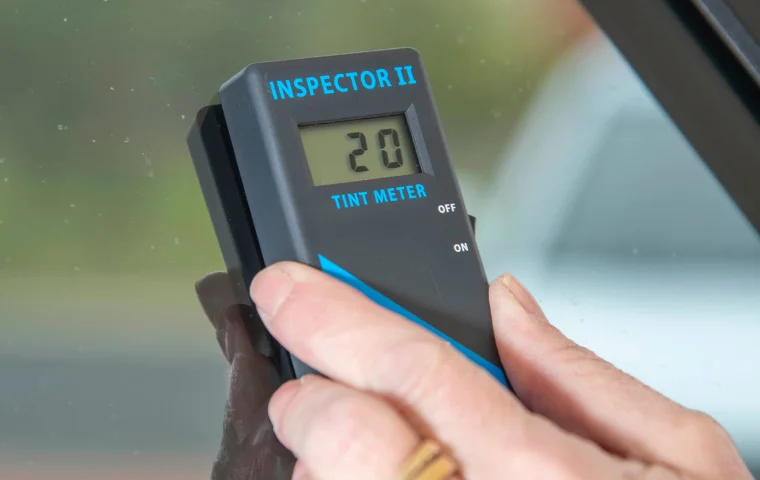
VLT stands for Visible Light Transmission.
It refers to the percentage of visible light that passes through the glass and film combined.
- 35 percent VLT means 35 percent of visible light passes through
- 20 percent VLT means 20 percent of visible light passes through
Lower percentage = darker appearance.
Higher percentage = lighter appearance.
It is important to understand that darkness and heat rejection are not the same thing. Modern film technologies can provide strong heat and UV performance without going excessively dark.
Car Window Tinting Busselton: WA Legal Limits Explained
Western Australia has clear and specific tint regulations designed to protect driver visibility and road safety.
The Windscreen Tint Rules
- No tint film may be applied to the windscreen
- A tinted band is allowed across the top
- The band must remain above the swept area of the wipers
- It must not intrude into the primary vision area
- The band must not exceed 10 percent of the windscreen area unless written approval is provided
Front Side Windows (Forward of the B-Pillar)
- Must allow at least 35 percent VLT
This means “limo tint” is not permitted on front windows.
Rear Side Windows and Rear Window
- A minimum of 20 percent VLT is allowed
- Passenger vehicles must have compliant external mirrors fitted on both sides
Reflectance Rules
- Mirror-like or highly reflective films are restricted
- WA limits reflectance of window tint film to 10 percent
These rules exist to maintain driver visibility and allow other road users to see the driver’s face at intersections.
Is Darker Tint Always Better?
The short answer is No. Darker tint does not automatically mean:
- Better heat rejection
- Better UV protection
- Better safety
Going too dark can:
- Reduce night visibility
- Increase compliance risk
- Affect driver confidence in low light
For Busselton drivers, especially those commuting at sunset, clarity is just as important as comfort.
Why Tint is Important in Busselton
The South West experiences:
- Strong UV levels
- Seasonal glare
- Long summer daylight hours
- Exceptional sunset (which reduces visibility)
- Coastal brightness and reflective surfaces
Less glare makes driving more comfortable and reduces eye strain on longer journeys.
UV protection helps prevent fading, cracking and heat build-up inside the car. The interior lasts longer. The cabin stays cooler. Passengers travel in greater comfort on bright days.
Heat control also matters. Window tint does not remove heat, but solar control films reduce heat gain and glare. Many drivers use them to improve comfort in warm weather.
The aim is balanced performance that meets legal limits. The result is better comfort without compromising compliance.
Dyed vs Ceramic Tint: What Should You Choose?
There are two commonly discussed categories:
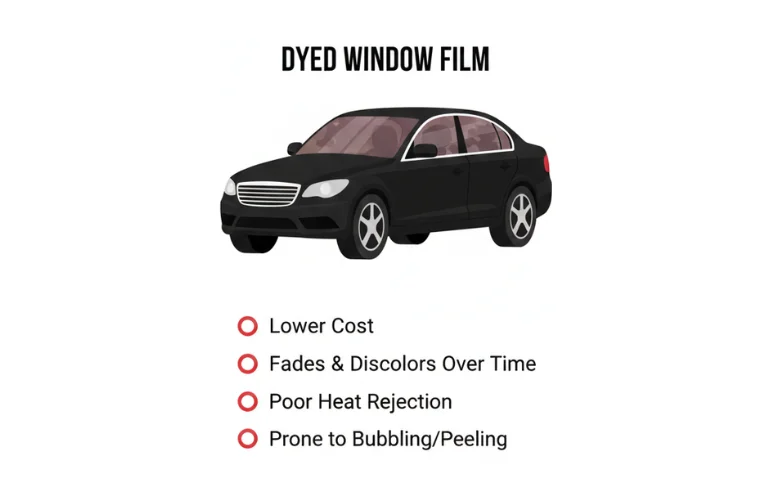
Dyed Film
- Generally more budget-conscious
- Provides glare reduction and privacy
- May fade faster in high UV environments
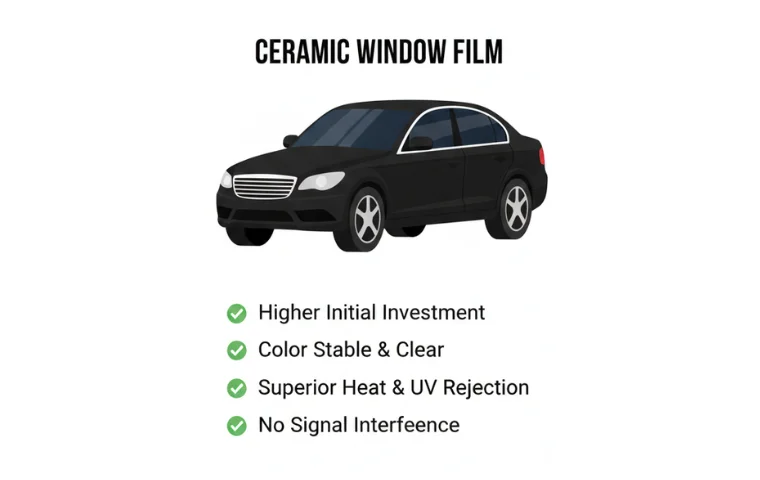
Ceramic Film
- Marketed for stronger heat rejection
- More stable colour performance
- Does not rely purely on darkness for performance
Film selection should be based on:
- Compliance
- Heat goals
- Glare sensitivity
- Long-term durability
Not simply on achieving the darkest possible look.
Dyed vs Ceramic Tint: Practical Comparison for Local Vehicles
| Feature | Dyed Film | Ceramic Film |
|---|---|---|
| Heat Rejection Performance | Provides basic heat reduction mainly through light absorption | Designed to provide stronger heat rejection using advanced film technology, without relying solely on darkness |
| UV Reduction | Reduces UV transmission when compliant film is used | Typically offers high UV reduction while maintaining clarity and compliance |
| Colour Stability Over Time | May fade or shift in colour with prolonged UV exposure | More colour-stable in high UV environments such as coastal South West WA |
| Glare Reduction | Effectively reduces glare depending on chosen VLT | Reduces glare while maintaining clarity, even at compliant lighter shades |
| Typical Cost Positioning | Generally more budget-conscious | Usually positioned at a higher price point due to film technology |
| Compliance Considerations | Must still meet WA VLT and reflectance limits | Also subject to WA VLT and reflectance limits regardless of performance claims |
| Best For | Drivers wanting glare reduction and privacy at a lower investment | Drivers prioritising heat management, long-term durability and clarity without going excessively dark |
Does Tint Affect Night Visibility?
When installed correctly, compliant film at 35 percent VLT on front windows maintains clear and safe visibility. The driver keeps a strong view of the road while reducing glare and light intensity.
However:
- Extremely dark rear tint can reduce reversing clarity at night
- Poor quality film can create haze or distortion
- Incorrect installation can affect visibility
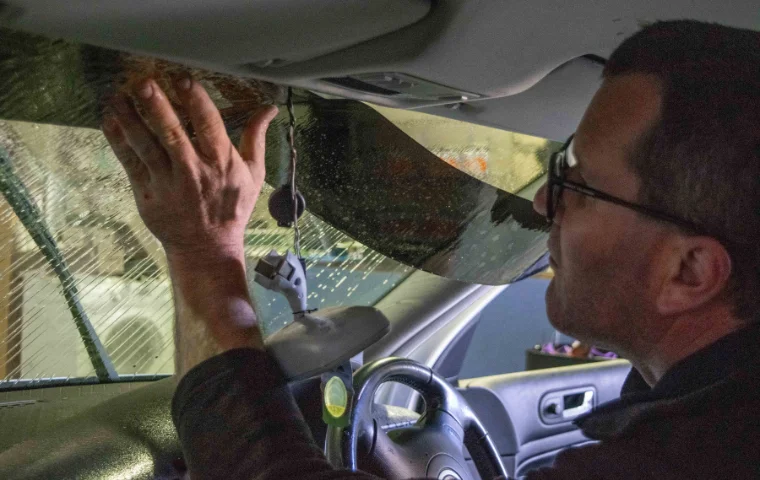
Professional installation ensures clarity and compliance are both maintained.
Don’t take our word for it!
Meaghan O.
Very quick and easy service. Jill was so helpful and friendly. Highly recommend!
Rod
Thanks Mel and the crew for such a friendly and professional service.
Dave D.
Amazingly prompt and professional job. Thanks to all at SW Windscreens.
Are you looking to tint your car windows?
Choosing the right tint is not just about appearance. It is about compliance, visibility and long-term performance in South West conditions.
At South West Windscreens & Tint, we:
- Install compliant window film that meets WA tint laws
- Measure VLT accurately before and after installation
- Explain legal limits clearly in plain English
- Use quality film suited to high UV and coastal conditions
- Provide professional installation with clean finishes and proper curing
As a locally owned and operated Busselton business, we prioritise safety, clarity and doing the job properly the first time.
Visit our website to learn more or contact our team today for a free quote and practical advice tailored to your vehicle.